
- December 15, 2025
- Posted by: Aceget
- Category: Uncategorized
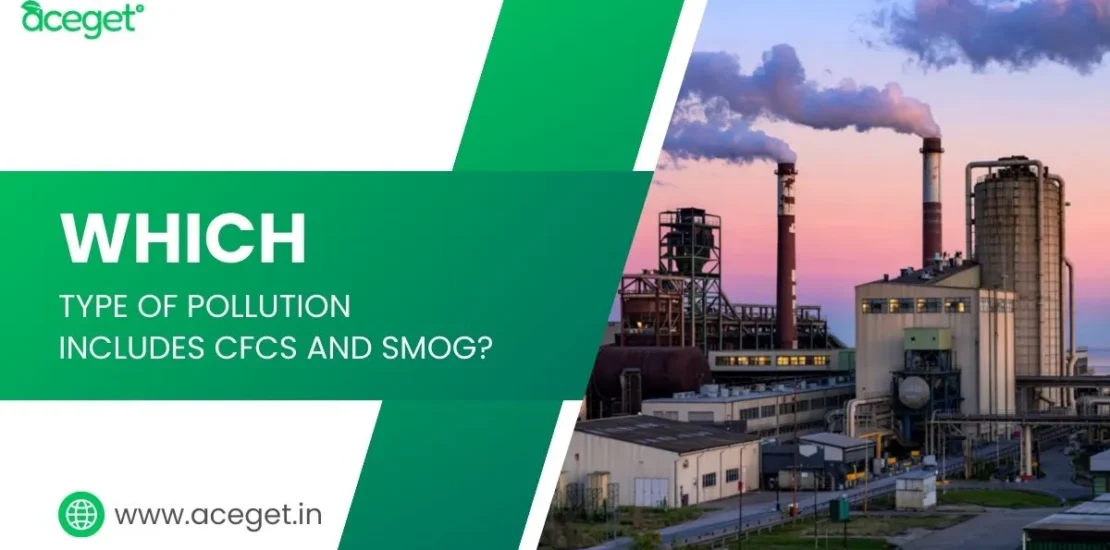
Pollution is a health affecting problem that affects millions of people worldwide. Pollution is available in many forms but each one affects your daily life in every way. Pollution takes places everywhere from the air we breathe to the water we drink. Or ignoring these types of pollution is very harmful for humans and the environment. In recent years, one type of air pollution is widely attracting people whose name is CFCs (Chlorofluorocarbons) and smog.
CFCs and Smog both are a type of air pollution both have differently affecting environments, and human health. and it is important to know which type of pollution includes CFCs and Smog. In this blog we discuss below which type of pollution Includes CFCs and Smog. and how pollution is a serious problem for health and ecosystem.
What are CFCs and Smog?
CFCs (Chlorofluorocarbons) and smog both are heavily impacted environments. Or both are a type of air pollution. CFCs are synthesized, man made compounds mainly used in refrigerants, propellants, solvent and aerosol sprays. It is mainly used in manufacturing industries such as refrigeration, air-conditioning, foam manufacturing and aerosol production. CFCs damage the ozone layer, which protects earth from ultraviolet radiation.
Smog is a type of pollution that is a mixture of fog and smoke. It is mainly associated with vehicle exhaust and industrial emission especially in urban areas where vehicle count is high. Both are harmful for air and part of environmental and health issues, it is important to overcome their presence in the atmosphere.
Different Types of Air Pollution – Which Type of Pollution Includes CFCs and Smog?
To know where CFCs and Smog fit in, let’s understand the main types of pollution:
1. Air Pollution
Air pollution happens when the atmosphere is surrounded by harmful substances, such as harmful gases, chemicals, and particles entering the atmosphere. Air pollution sources are wide to start from car emission to industrial plant and household products also. Including the CFCs and smog is a type of air pollution and its impacts on health and the environment.
Here are some major pollutants and sources of air pollution include:
- Particulate Matter (PM): Particulate Matter is a mix of solid and liquid particles in the air, these are very tiny in size or visible in microscope. Particulate matter is classified by size in two types such as PM10 or PM2.5. It is develop when chemical reactions in the atmosphere due to emission from factories and vehicles.
- Gaseous Pollutants: Gaseous pollutants are a type of air pollution that consists of airborne substances in a gaseous state that can be harmful for the environment & the health. In the gaseous pollutants these are some gases present such as sulfur dioxide, nitrogen dioxide, and carbon monoxide. These types of pollutants are harmful for human health or cause problems like asthma and bronchitis.
- Toxic Air Pollutants (TAPs): Toxic Air Pollutants are harmful gases and tiny particles that are mainly present in polluted atmosphere such as benzene, mercury, and particulate matter. These are all toxic air pollutants that can cause cancer, birth defects and other serious medical issues.
2. Water Pollution
Water pollution happens when physical & chemical contamination introduces or mixes into water bodies such as lakes, rivers, & ocean. It decreases the water quality & heavily affects aquatic organisms and ecosystems. Water pollution is not direct connect to CFCs or smog but it works the same as air pollution or creating harmful environmental conditions.
Sources of water pollution include:
- Industrial discharge
- Sewage & wastewater
- Agriculture runoff
3. Soil Pollution
Soil Pollution happens when unsafe or toxic substances such as pesticides, industrial waste, heavy metals, or radioactive materials mix in the ground. It is very harmful for soil fertility and risks to human and ecosystem health and lead to health problems like cancer and deformities.
How CFCs and Smog Relate to Air Pollution
CFCs and Smog are a type of Air pollution. Both work as harmful substances for the environment. CFCs impact and destroy the ozone layer and contribute to warning. While smog affects everyday air quality & human health. CFCs and smog both together worsen air quality and contribute to global warming.
Both are air pollutants that contribute to atmospheric degradation.
Both trap heat, or impact climate changes and intensifying pollution-related problems.
Smog in urban areas is worsened due to increased heat, while CFCs contribute to global warming-creating a cycle that amplifies air pollution effects.
Conclusion
CFCs and Smog both are affecting environments through their particulate matter and other toxic gases. CFCs impact the ozone layer & weaken it while smog directly impacts your body & health. Understanding the nature and effects of CFCs and smog is an effective way to create strategies to reduce air pollution. We can improve the air quality with the help of some air cleaning improvements and strategies. As a social responsibility we aimed to be sustainable and environment friendly.