
- March 28, 2026
- Posted by: Aceget
- Category: Uncategorized
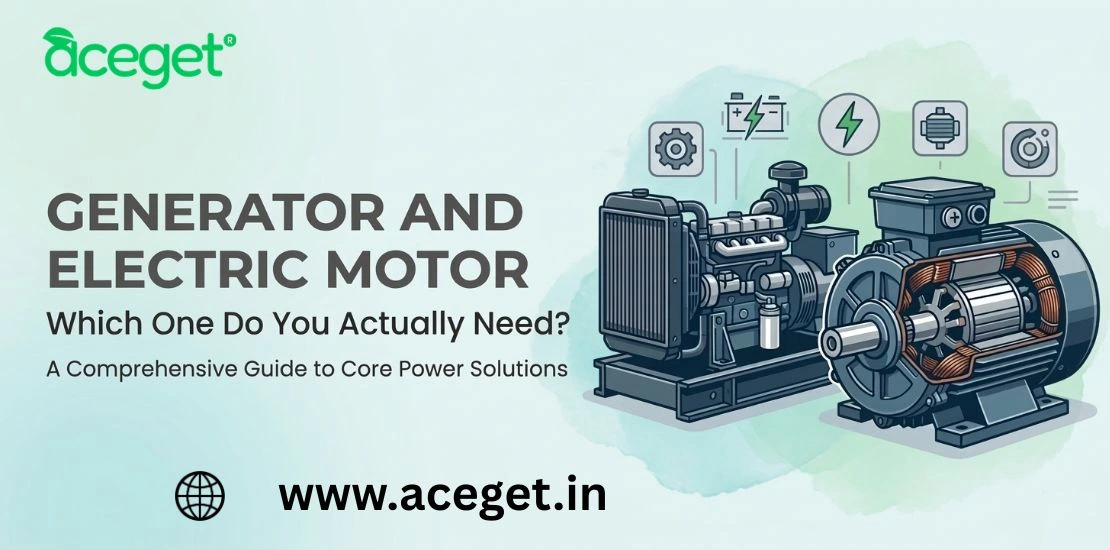
When it comes to electrical machines or appliances, the generator and electric motor both are used to convert one form of energy into another. Both the devices are essential for today’s technology, powering industries, homes and transportation systems. Generators convert fuel into electricity, which is also ideal for grid components, high torque or backup power. However, they also offer high efficiency, lower maintenance and clean operation for industrial applications. An electric motor converts electrical energy into mechanical energy and a DG Set converts mechanical energy into electric energy. We discuss the key differences between generator and electric motor with its working capacity and applications.
Moreover, we can also say that both the devices are almost same in design as well as similar in component type. They follow the Fleming rule at the time of operation. In this comprehensive guide, we will break down the differences, types, advantages and real world applications of generator and electric motors. In addition, this blog will give you a complete understanding about the generator and electric motor.
Difference Between Generator & Electric Motor
Both are the power devices used for backup and other electric appliances. They are mainly used for converting the energy into one form to another. Comparing these devices explains its differences and similarities with their features. Motors use the Fleming left hand rule while the generators use Fleming right hand rule. However, the generators can supply electricity while motors consume it. Motors use electricity for the devices, which are fans and pumps, whereas generators produce power for applications like turbines or backup systems. Moreover, we discuss the core difference between generator and electric motor with its applications.
What is a Generator?
A generator is a machine that combines a diesel engine with an alternator to convert chemical energy into electrical energy. It works as a reliable, durable and fuel efficient power source for backup. These components include the diesel engine, alternator with the operations on compression of ignition. It is used as prime or emergency standby power sources for homes, industries and for multiple locations.
Diesel Generator Working Principle
Understanding the working of a diesel generator and how actually the generator works and moves internally. When a diesel fuel sparks inside the engine, it drives the pistons and turns in the crankshaft. This mechanical motion rotates the alternator, creating a magnetic field that includes electrical current in the stator coils. In simple words, the generator uses a diesel engine to turn an electrical generator by producing a supply of usable electricity. This process follows a 4-stroke cycle which includes intake, compression, power and exhaust. Moreover, this process helps to spin the rotor and generate electrical power. In addition, the common uses of generators include.
- It uses power plants such as thermal, hydro energy and wind energy.
- Available for backup power systems.
- Used in portable generators for homes.
- It is also used as an industrial electricity supply.
- Used for renewable energy systems.
Key Components of Generator
The key components include in a generator which are.
- Rotor, which is also termed as rotating part.
- Stator derives from the stationary part.
- Magnetic field source.
- It also includes commutators or slip rings.
- The generator includes the brushes.
What is an Electric Motor?
An electric motor is an electromechanical device that converts electrical energy into mechanical energy, through the interaction of magnetic fields and it also includes current flowing conductors to generate force and rotation. The common applications for electric motors are widely used in day to day life. These are ranging from household items such as blenders, vacuums and washing machines to electric fans and electric vehicles.
Electric Motor Working Principle
To understand the working principle of electric motors, which operate on a current carrying conductor placed in a magnetic field that experiences a force. This force can cause rotation, which produces mechanical motion. An electric motor uses magnets to create motion and the fundamental law of magnets shows, opposites attract and like repel. The interaction between the field and the current produces a force that causes the rotor to spin. Moreover, this working principle includes some common uses which are.
- It is mainly used for household appliances such as refrigerators, washing machines and so on.
- Used in electric vehicles.
- It is also used in industrial machinery.
- It is commonly used for pumps and compressors.
- Electric motors used for robotics and automation.
Key Components of Electric Motor
These key components include such as.
- Armature
- Stator
- Rotor
- Brushes
- Power Supply
How Generator Differ From Electric Motor?
The fundamental difference in the generator vs electric motor comparison lies in the energy conversion. However, we also discuss similarities between both the devices. This comparison includes the features which are.
| Features | Generator | Electric Motor |
| Energy Conversion | It converts energy from mechanical to electrical. | It converts energy from electrical to mechanical. |
| Input | It uses mechanical energy. | Use electrical energy. |
| Output | Electrical energy. | Mechanical energy. |
| Working State | Electromagnetic induction included in the generator. | It works on the Lorentz force principle. |
| Applications Usage | Used for power generation. | It is used in motion and operation. |
Similarities Between Generator and Electric Motor
After the comparison of generator and electric motor, now we discuss the key similarities for both the devices.
- Both use magnetic fields and conductors.
- They have similar structural components such as rotor or stator.
- They can be worked as reversed such as a motor can act as a generator and vice versa.
- Both are essential in electromechanical systems.
Advantages of Generators
- Provides electricity in remote areas.
- Ideal for backup power.
- It supports renewable energy generation.
- Reliable for continuous energy supply.
Advantages of Electric Motors
- Electric motors need low maintenance.
- It is highly efficient.
- Environment friendly
- Quiet operation
- It is compact and versatile.
Conclusion
In conclusion, we hope you understand the differences between the generator and electric motor easily. The ultimate comparison comes down to energy conversion. A generator produces electricity from mechanical energy and an electric motor produces motion from electrical energy. However, we discuss the working principle with their key components. Moreover, this blog defines the comparison and similarities for both the devices. Understanding their differences and similarities help to make a proper decision making for your better concern.