
- March 30, 2026
- Posted by: Aceget
- Category: Uncategorized
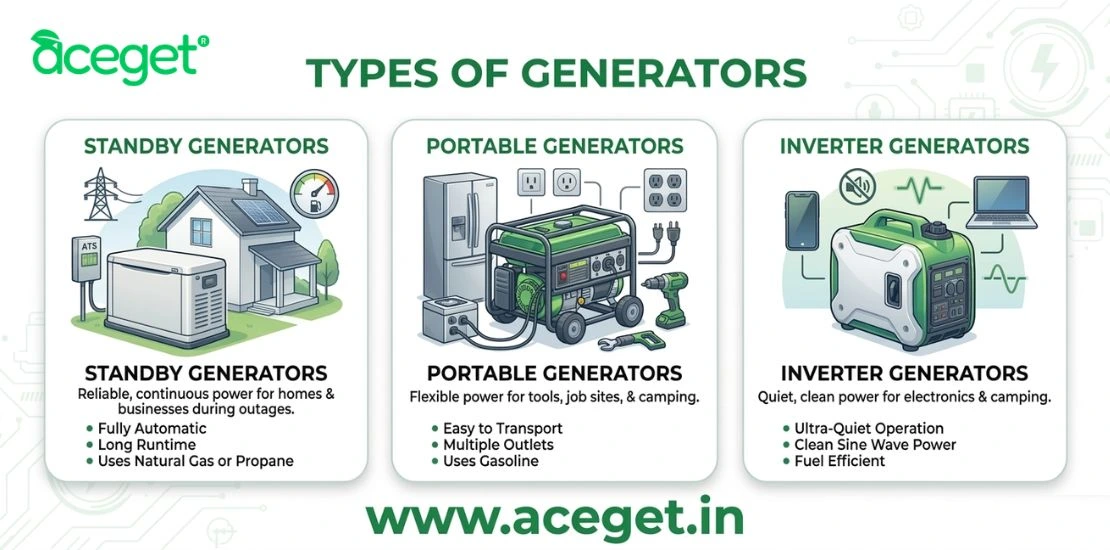
Generators have become an essential part of today’s life, ensuring an efficient power backup during outages and also for off grid locations. In today’s world, electricity is a very important resource for everyone’s life. Whether you are at home or in the office or even driving a vehicle and flying in an airplane, these all need power supply (electricity) to run. We discuss the types of generators with a complete guide to understand the necessity of electricity in our day to day life. Moreover, the generator converts mechanical or chemical energy into electrical power, which is derived by fuel source, portability and power output. However, when power is not available in the local grid, then the generators help to provide power supply. Most of the generators use a fuel supply like diesel, gasoline or natural gas to provide electricity.
To get a good power supply or backup, it is very important to choose the right type of generator for your application which can also maintain it properly. In this detailed breakdown, we discuss the types of generators with different technologies, applications and its usages. Sometimes choosing the right generator for your needs is also a big concern. Additionally, the generators are classified on various things such as based on design, fuel type and power output.
What Are the Different Types of Generators?
Exploring the various types of generators, which are portable, standby, inverter, industrial and solar generators. Moreover, these also include the generators by fuel type such as diesel, propane and natural gas. These generators are mainly used for various purposes such as residential or industrial use. In addition, this blog includes the types of generators as well as the uses of generators. These devices always provide electricity, whether it is for large industrial usage or for small residential usage. The different types of generators produce energy for external circuits, which are based on electricity.
1. Portable Generator
Portable generators are compact, movable units designed for temporary power needs. They are widely used when the power disconnects or when electricity goes out. In portable generators, there are various types of generators available in the market according to its size, capacity and power. Therefore, all you have to do is calculate the load or power according to your requirement. After all this stuff, you can purchase the right one which is best for your usage. You can use a portable generator for multiple purposes such as camping and tailgating. These portable generators are also used as an emergency backup plan such as for home appliances. Moreover, these generators are very useful and easy to carry for working outside. You can easily carry these generators anywhere because it came with a wheel kit. Furthermore, they can save money and energy.
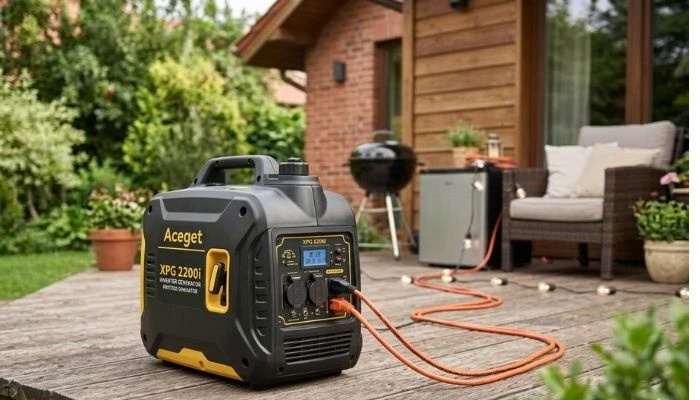
Characteristics of Portable Generator
Here are some characteristics for understanding these types of generators, which are.
- They came with wired into a facility subpanels.
- Uses a combustion engine to conduct electricity.
- Portable generators have enough power to run basic appliances of your home such as television, freezer and refrigerator.
- It can be used in remote sites.
- It also helps to plug into electrical tools via its sockets.
- Can power tools and lights.
- These generators use a governor to control the engine speed.
- Usually powered by petrol or diesel.
2. Inverter Generator
An inverter generator uses an engine which connects to an alternator to produce more AC power. It is a portable source of power that produces high quality, stable electricity by transforming raw power from direct current to alternative current. It makes it safe for sensitive electronics items like mobile phones, laptops and other appliances. However, they are quieter, more fuel efficient and compact because they adjust the engine speed to match the power. These inverter generators are most lightweight which are easily available in today’s market.
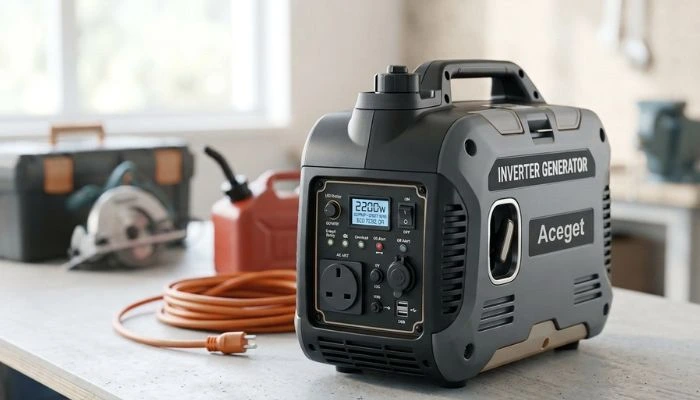
Characteristics of Inverter Generator
Now, we discuss the characteristics of inverter generators to understand the types of generators.
- It is used in advanced electronic circuits.
- Relies on high tech magnets.
- It can maintain a regular flow of current to an appliance.
- Its body and full size generator are small in size and lightweight.
- Uses three phases to generate electricity.
- The inverter generator gives output in AC, then converts it to DC and finally inverted to AC.
- It is more energy efficient and the engine speed adjusts itself according to how much power is needed.
3. Standby Generator
Standby generator is an automatic transfer switch that commands it to power a device up during the power loss. It is a permanent installed backup electrical system that helps to supply power to your home or businesses within seconds. Standby generators use ATS (Automatic transfer switch) to detect power loss which starts with natural gas or propane. It mainly supplies power to the circuits.
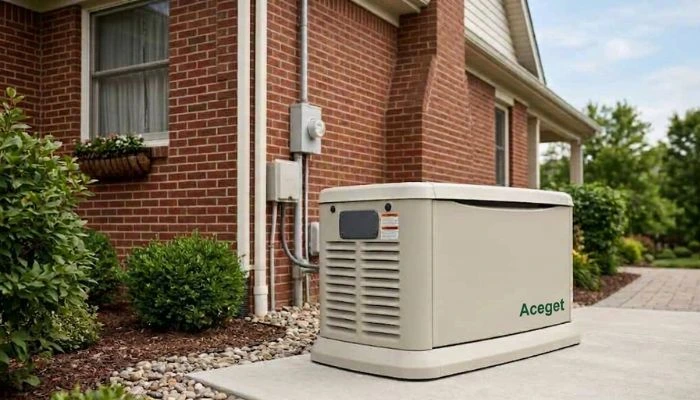
Characteristics of Standby Generator
- It can deliver permanent power protection.
- Operates automatically.
- It uses an internal combustion engine.
- These generators can operate on liquid propane or natural gas.
- It has two components: a standby or an automatic transfer switch.
- These help in regular monitoring power.
- Also used in safe systems for elevators, medical and life support equipment.
4. Diesel Generator
A diesel generator is a device which can combine a diesel engine with an electrical alternator to convert diesel fuel into electrical energy. Exploring different types of generators which have a capacity to produce a high amount of power supply. However, it produces electricity for their durability and efficiency. They are widely used for backup power supply in homes, hospitals and construction sites. In addition, the diesel generator operates by burning fuel to create mechanical power.
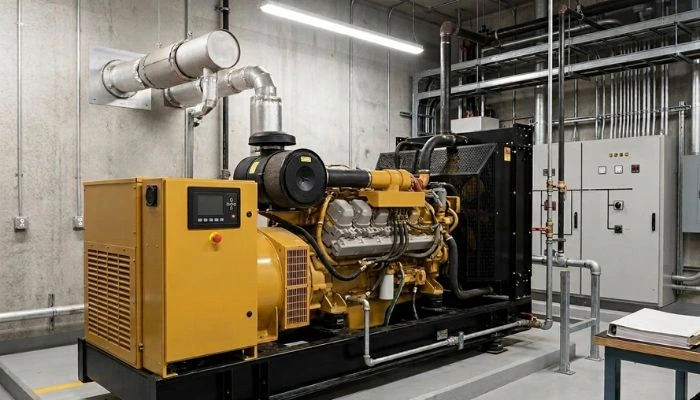
Characteristics of Diesel Generator
Here, the key characteristics of diesel generators are.
- It has high efficiency and reliability.
- Use for their durability and long-life.
- They can rapidly start the applications.
- It can also perform automatic operation.
- Diesel generators can range from 9kVA to 3550kVA.
- They can also work parallelly to manage the high load.
5. Industrial Generator
Industrial generators are used for heavy work load, high capacity power systems which are designed for regular operations or emergency backup in demanding environments such as factories, hospitals and data centers. However, they also need to provide a wide range of power supply characteristics. These powered generators range from 20kW to 2500kW suppliers. Industrial generators are customized to different types of power generators. These include fuels such as diesel, gasoline, natural gas and propane used to run the engines that help to generate electric power.
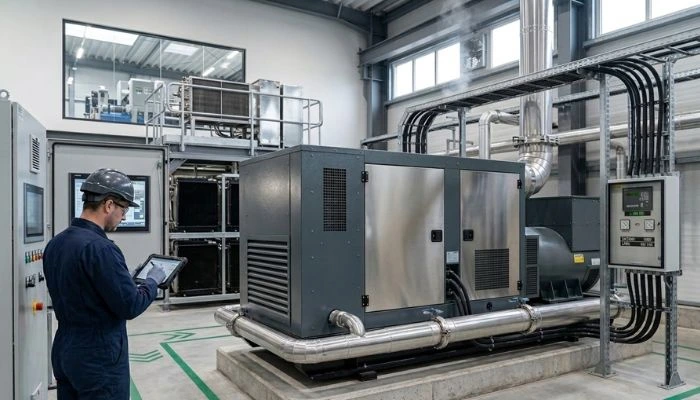
Characteristics of Industrial Generator
- It uses its maximum energy efficiency.
- Industrial generators have optimal cooling systems.
- It came with fuel flexibility.
- Industrial generators also help in advanced monitoring.
- Supports three-phase power.
- It is also used in remote locations or extended outages.
Conclusion
In conclusion, we hope you understand the types of generators with its key characteristics. It is essential for making an informed decision by choosing the right one according to your needs and requirements. We discuss various generators which give you clear aspects such as portable and inverter generators. Choosing the right generator depends on your power needs, budget cost and usage capacity. In this blog, we discuss a brief understanding that you need a power backup for your home. However, these are a reliable power source for your business or eco-friendly off-grid living environment. In addition, you can also invest in a generator that delivers right efficiency, reliability and long-term value.